- IVF Options
- Causes Of Female Infertility
- Advanced Maternal Age
- Cushing’s Syndrome
- Early Menopause
- Endometriosis
- Fallopian Tube Damage
- Hyperpituitarism
- Hyperprolactinemia
- Implantation Failure
- Inflammation of the Fallopian Tube
- Ovarian Rejuvenation
- Pelvic Inflammatory Disease
- Polycysic Ovary Syndrome
- Polyps in the Uterus
- Primary Ovarian Insufficiency
- Recurrent Pregnancy Loss
- Thyroid Hormone Imbalances
- Turner Syndrome
- Uterine Fibroids
- Uterine or Cervical Abnormalities
- Causes Of Male Infertility
- For Single Parents
- Egg Donation & Surrogacy
- Lab Services
- LGBTQ



Understanding the risks and considerations for women considering childbearing in their 30s and 40s.
The data from the U.S. Centers for Disease Control indicates that birth rates for women in their 30s are at their highest levels in four decades, while birth rates for women in their 20s are slowing down. “While there are many legitimate reasons to postpone pregnancy, this is not the best choice for everyone. As a society, we must remain mindful of the modest increase risk of infertility and pregnancy complications as women age” Dr. Kort says.
“Such a critical life decision to get pregnant, and when to do so, is incredibly personal and involves different factors for each woman and/or couple,” explains Dr. Kort, who is fellowship-trained in reproductive endocrinology and infertility. “But for women over 30, these choices can be complicated by the passing years. The good news is, the vast majority of pregnancies in women over 30 end with a healthy baby and a healthy mom.”
Conceiving in your 30s
Simply put, it’s not as easy to become pregnant after 30 as it is before, Dr. Kort notes. But that doesn’t mean the news is all dire. “The majority of women conceive without fertility assistance in their 30s, with estimates ranging from 70-85%,” he says.
Staying pregnant is also more difficult after age 30, with the miscarriage rate increasing over the next decade and beyond. “Most miscarriages result from chromosomal abnormalities in the fetus, and the chance of this increases as women age,” he explains. “But every pregnancy carries the risk of miscarriage, and most women in their 30s carry their pregnancies to term.”
“These modest risks don’t typically stop most women in this age range from becoming pregnant or having a healthy baby,” Dr. Kort adds. “They are merely factors that must be kept in mind on the successful path to motherhood.”
Health risks balanced by rewards.
The risk of certain pregnancy complications increases in women over 30, especially those in their late 30s, Dr. Kort explains. These include:
- Premature labor and/or birth
- Preeclampsia, which involves a life-threatening spike in blood pressure
- Gestational diabetes
- Cesarean (surgical) delivery
So too do health risks rise to babies born to women over 30. These include:
- Genetic abnormalities, such as Down syndrome
- Low birth weight
- Complications related to prematurity
When weighing the risks and rewards of childbearing after 30, Dr. Kort says, most women opt to go ahead and fulfill their dreams of having a baby.
“Women over 30 can take several key steps to optimize their health and that of their baby despite the risks,” he adds. “By seeking regular prenatal care, eating a healthy diet, staying active, gaining weight wisely and learning about appropriate prenatal tests, would-be mothers can use their age to their advantage by educating themselves on a healthy pregnancy and the many ways they can contribute to a great outcome.”
Neway Fertility is one of New York’s leading fertility centers specializing in customized and effective fertility treatments.
Daniel Kort, MD, is a double board-certified obstetrician/gynecologist and reproductive endocrinologist and is associate medical director of Neway Fertility in New York City.
Especially right now, nothing is more important than protecting your health. That’s why Neway Fertility has developed a comprehensive set of safety guidelines for your visit.
Please review this page carefully so that you understand the steps you’ll need to take, and the factors you will need to start considering, well in advance of your visit.
When booking your appointment
You must review and sign our COVID-19 consent form before scheduling your initial treatment appointment. The form should be read carefully. In summary, it requires patients to attest to having followed, and their willingness to continue following, specific social distancing rules. The patient must also attest to observing specific health guidelines and meeting specific requirements. Download the form and please review it carefully.
When confirming your appointment
A receptionist will verify that you have returned the abovementioned COVID-19 consent form.
You will also be instructed to call ahead of your appointment to inform Neway staff if you (and your partner, if also being treated at Neway) have symptoms suggestive of COVID-19 such as cough, shortness of breath, fever, or chills. Anyone with such symptoms will need to reschedule.
If you have been in close contact (within 6 feet) of anyone who has had the abovementioned symptoms, regardless of COVID-19 test result, you will also need to cancel your appointment and self-isolate for 14 days from the date of last contact, before rebooking an appointment.
Arriving for your appointment
When you arrive, please wait outside the building and check in with our receptionist by calling 212-750-3330. You will receive a return call once the clinical staff is ready for you, and you may then enter the building. Companions or partners must wait outside unless they also have an appointment.
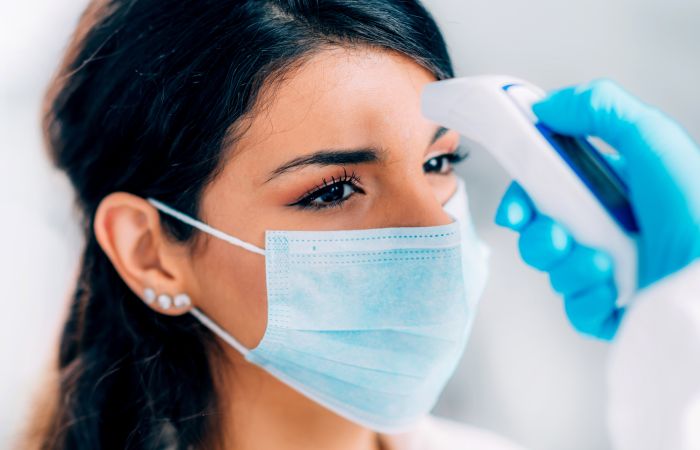
Once you enter the vestibule, your temperature will be checked. If your temperature is equal to or greater than 38°C (100.4°F), your appointment will be cancelled and you will exit the building. A coordinator or physician will call you to discuss a follow-up plan.
If your temperature is less than 38°C (100.4°F), you will be offered hand sanitizer, then given gloves and a mask to wear during your entire visit.
Leaving your appointment
As you exit the building, you will discard your gloves and masks in a designated disposal bin near the exit. The bin will be disinfected regularly.
If you have any questions about these guidelines, please do not hesitate to reach out to us by calling 212-750-3330. We want you to feel secure and comfortable during your appointment with us.
NOTE: This information is subject to change. As the COVID-19 pandemic is a dynamic and fluid condition, weekly assessment of the risk of community-acquired infections, knowledge of the disease, and additional resources to mitigate, test for, and treat the condition will be reviewed. We will update this page as needed.
Updated April 30, 2020

IVM stands for “in vitro maturation,” not to be confused with IVF or “in vitro fertilization”, though both have some things in common and the same aim of facilitating a successful pregnancy. IVM might best be described as a milder, gentler form of IVF which involves harvesting eggs from naturally developing or minimally stimulated follicles and allowing them to mature in vitro (outside of the body in a controlled laboratory setting) until ready for fertilization with sperm.
By contrast, conventional IVF stimulates these small fluid filled follicles with gonadotropins, an injectable medication, for 9 to 12 days to obtain maturity of eggs before harvesting, i.e. removing them from the body, to be fertilized with sperm in a laboratory setting. The best candidates for achieving the highest rates of pregnancy with IVM are women less than 37 years old, with a good reserve of follicles. Below is a fuller description of the biological terms and processes, as well as some of the indications for going this route to achieve a pregnancy.
The ovaries throughout a woman’s reproductive years are made up of follicles and within each follicle is one egg, which is referred to as an oocyte. Most of the follicles are infinitesimally small, inactive and constitute a “resting pool” of follicles within the ovary. Every month a group of follicles we call the “cohort” leaves the resting pool and enters the path of follicle growth. At the beginning of each menstrual cycle, an average of six maturing follicles in each ovary can be easily visualized by ultrasound as black dots and the exact number can be counted. These naturally grown follicles are on the way to becoming the source for immature eggs which can be collected by aspirating fluid from these follicles. Using IVM, under well controlled laboratory conditions such as exist at Neway’s state-of-the-art facility, many of these oocytes will mature until ready to be fertilized in the very same way as in conventional IVF. Once embryos have developed, one or more can be transferred into the uterus to allow for the possible and much hoped for successful pregnancy.
With Neway’s expert multi-disciplinary team of doctors and embryologists, a careful evaluation is made for each patient to determine who would be a good candidate for IVM. By this careful selection, our pregnancy rate to date has been equal to that of conventional IVF. In addition, we are pleased that we can offer hope to women who are considered “poor responders” meaning less likely to achieve a pregnancy with IVF due to a smaller number of oocytes available and with a higher percentage of immature oocytes. Within our field until now, IVM has been recommended primarily for women with polycystic ovaries (generally speaking, they have many small follicles and no ovulation) who are more likely to suffer ovarian hyperstimulation syndrome with conventional IVF, a painful and distressing side effect of the gonadotropic medications. IVM combined with egg freezing is without question a much needed option for preservation of fertility for women who are faced with a need to undergo radiation or chemotherapy for treatment of cancer.
In short, at Neway we see IVM as being as being an excellent option for a wide variety of patients, and for many it may be a good first option for treatment of infertility. Neway together with its partner clinics (Maria Hospitals) in Korea are pioneers in this method and about one fourth of all IVM babies born worldwide have been with Neway in New York and Maria Hospitals in Korea.
Should you have any further questions or concerns about how IVM works and/or ready to start your fertility treatment, please feel free to give us a call at 212-750-3330.
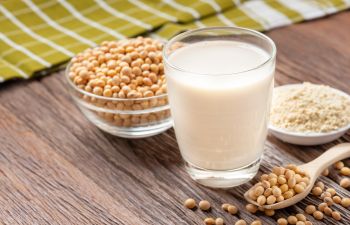
Soy products are extremely popular and can be found just about anywhere. There are a number of reasons why this plant bases protein is a healthy food choice. Eating soy has a multitude of benefits: lowering the risk of heart disease, osteoporosis, breast cancer, maintaining healthy cholesterol levels, and even minimize symptoms of menopause. So why would this be something that we need to be concerned about when planning to conceive a child?
Soy is considered to be an estrogenic plant, meaning the chemicals produced when digested interact with our hormone signals. These chemicals are known as Phytoestrogens, or in the case of soy specifically, isoflavones. Isoflavones are not as potent than the estrogen hormones our bodies produce, but they are strong enough to cause the receptors in our body to respond to their presence in our system. When we digest soy, these chemicals can mimic the presence of the natural estrogen in the body, but are also known to work an inhibitor for normal estrogen activity. What does this mean?
Studies have shown that women may encounter decreased levels of estrogen when consuming soybeans and soy-based products, and estrogen levels could be affected are extremely important for women trying to get pregnant. However, there hasn’t been a large amount of studies done to give us enough evidence of whether or not soy absolutely affects fertility. Several results of the studies spanning over 20 years have conflicted conclusions and many cultures around the world consume soy quite often and still have high rates of fertility.
If you are having trouble conceiving, it’s not a bad idea to limit your soy intake. If anything, it can rule out whether it is contributing to your fertility challenges. Every woman is unique and challenges surrounding conceiving could be related to something entirely different. It’s always best to discuss all possibilities with your physician. If you need help with or have questions surrounding nutritional counseling, please feel free to give us a call at 212-750-3330.
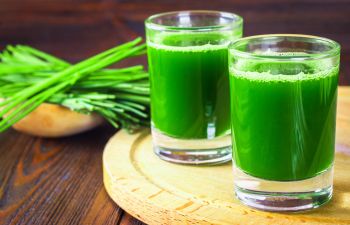
So what’s the deal with wheatgrass? Usually seen served juiced with a slice of fruit, this superfood packs a powerful punch for your health and will likely make a big difference when it comes to your fertility. For starters, any green vegetable that we eat is high in alkaline. High alkaline foods help balance our pH levels and wheatgrass is a front runner for the alkalizing effect is has on our bodies.
Wheatgrass contains rich levels of chlorophyll, Folic Acid and vitamins C & E. All of these nutrients serve as a body cleanser, boosting the body’s production of red blood cells and aiding against free radicals . When our bodies are void of free radicals, we have a perfect environment for our ovaries to not only produce high-quality eggs but possibly preserve the follicle deterioration that comes along with age. A balanced pH level helps the fluid in women’s bodies become more receptive to sperm: extremely volatile little swimmers that are easily damaged by free radicals.
The Folic Acid in wheatgrass has been shown to help improve the overall quality of semen, sperm count, and DNA stability, but it doesn’t stop there. The high level of chlorophyll in wheatgrass helps to improve cell structure, reduces inflammation and counteracts with a variety of toxins. This also helps promote a more regulated cycle.
All in all, wheatgrass is known to help combat the damaged caused by certain environmental factors in our bloodstream, assuring healthier sperm and oocytes. If you’re feeling extremely natural, you can always chew wheatgrass to gain its effects, but if that’s not your idea of fun, one or two servings of wheatgrass juice a day begins to work into our systems in about 20 minutes.
It’s always best to consult with your doctor before consuming wheatgrass as a nutritional supplement. If you need help with or have questions surrounding nutritional counseling, please feel free to give us a call at 212-750-3330.